

Look out for the Luddites <3

Updated: Sep 14
I worked on an ERP implementation project where their legacy system had been built by their “IT guy”. He was one of the original members of staff and pretty much built their entire ERP in Access. It was incredible (and way more complex than I am explaining here). I watched him have to describe to myself and the solution architect (who luckily was one of those original coder type guys who really got it) how it worked and hung together and it was incredible.
They'd been acquired and so the business was being brought on to group software. But what he had created was insanely cool. I didn’t think too much of it at the time but that must have been so painful. All that work - essentially he had built the business systems from the ground up, taken them apart and rebuilt them as they integrated with other systems, as the business grew and changed and then suddenly - there we were - documenting it, migrating it and changing it.
By doing all of that work he of course became an expert, a craftsman, an artist - and he was going to be left with a system much much worse with less accurate / useful functionality, one that was not user friendly and pretty disruptive. We all knew it - I am glad he got the chance to talk his work through with people who appreciated and knew how impressive his work was.
A bit like when we share wonderful talents and crafts like writing, videography and photography online just for ai to regurgitate into slop, without understanding what or why it is doing it or the reasons or meanings behind the art of it :)
Could this be a small insight into why some of us are a bit more reluctant to give away our intellect to machines, whether that’s AI … or a new ERP system? That’s a story that goes round and round - this blog is about Luddites, how they can smash your system, and why change management matters in ERP implementations.
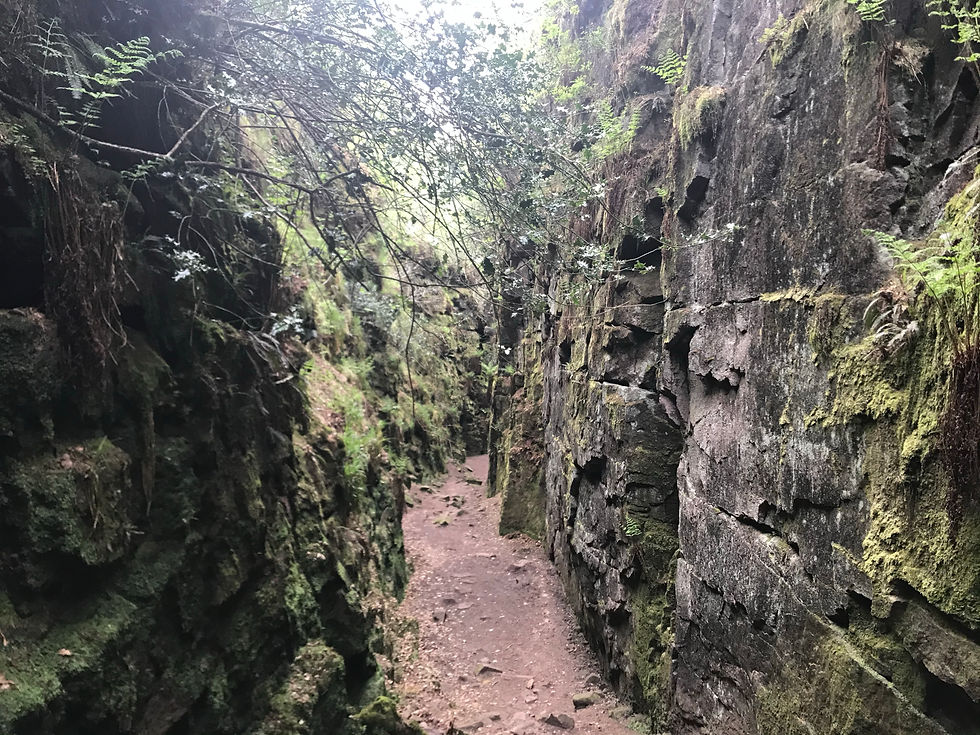


The Luddites were a part of a 18th century protest movement which began nearby my previous hometown of Nottingham, UK, also home of Robin of Sherwood, Major Oak, the Goose Fair, Mocky-D and the Nedd Ludd pub, and also close to the beautiful natural chasm that is Ludd’s Church (pictured).
The Luddites were a group of craftsmen & craftswomen, peoples, and cultures whose well honed skills were being pushed out in favour of machines that could produce thousands more products per day than hand crafted items - and so the English Industrial Revolution and much of recent capitalism apparently started around the midlands of the UK.
They weren’t happy with the low pay, job losses and bad working conditions associated with the introduction of these machines, as well as having to watch low skilled workers churn out poor quality products, and, so, machine smashing became their most powerful means of protest. Inspired by the tales of the apprentice Ned Ludd, the Luddites went round smashing up the machinery - to show their displeasure at the “ownership” and capitalisation of peoples’ skills.
These organised machine smashings were eventually quashed by the military and legal powers and progress was restored. In more recent times the word Luddite becomes associated with someone who fears or dislikes technology and new ways or working. One could argue - Not So - the Luddites had skills. They made beautiful products the way only people who had hours hours hours of mundane work, mistake making, experiments, research, engineering and dedication to being able to make real quality products, systems. They don't like the ways technology and machines are making things worse quality.
Absolutely fascinating - and there have been cycles and cycles of this over the years and probably in every civilisation and culture before and since.
So, like the Luddites, do people still go round smashing the machines up? In so many words : yes, and that’s why we have change management for ERP Implementations!
The smashing can be a little more subtle - process misalignment, data issues, decision delays, wilful disobedience, leadership failures, resulting in some of the following:
Shadow systems still being utilised - excel sheets or workarounds that prove hollow adoption Process sabotage - users continue to follow legacy workflows inside the new system undermining standardisation and integrity
Passive non compliance - incomplete data entry, delayed updates, or minimal engagement. The system degrades over time without open conflict
Over-customisation pressure - business units demand the ERP be bent to match old habits, effectively preserving the past inside new tech.
Leadership disengagement - Executives approve investment but don’t enforce behavioural change - arguably the most damaging form of resistance.
Managing your team’s fears around this change is crucial. The loss of control, the fear of displacement and the unknown are all real and valid reactions to an ERP implementation - you would be lying (or maybe think harder!) if you haven’t felt some of these same reactions to changes in some aspect of your own life. Guiding your team through properly means you have a better chance of successful adoption of your ERP system.
How we do it is similar for all implementations but a few stand out tips:
Be clear on your project values and objectives - this will help guide a lot of difficult decisions you will need to make - ensure you revise those values at regular intervals to keep them valid
Identify key decision makers and get them involved early - the rest of the stakeholders will be brought in once you have gathered all the decision makers together.
Have your disaster recovery plan well understood and rehearsed
Remember the technology is supposed to support your people and processes
Give people some credit and thanks (yeah yeah we all know that’s what the money’s for, but too often these people are underrated and have been carrying more than you might think - personally and for your business !)
Like the saying goes the only thing that’s certain is death and taxes - (death being the death of the old and introduction of the new, also known as Change). And so those changes (and taxes) need careful management so that you can achieve success - before, during, and after your ERP implementation. If you need advice, assistance or resources for your ERP programme or change management get in touch with ERP Advisers today.



Comments